Protecting Trees Before a New Build Development
Protecting trees during construction projects is important as it’s not easy to replace veteran trees, like a 300-year-old oak!
Construction traffic, plant operations and the storage of site materials in the wrong place can all lead to accidental tree damage.
Action needs to be taken to protect the tree and roots from accidental damage before any construction work can take place.
Dandara have been building award-winning homes for over 30 years but before they could get started on the construction of 400 new homes, they needed to make sure all trees on the site were protected.

We recently installed over 4km of tree protection fencing for them as part of our BS5837 root and tree preservation service. The fencing was positioned so as to create a safe exclusion zone around the trees, staggered so as to protect the canopies as well. It’s strong enough to act as a robust physical barrier in the event of accidental machinery collision.

We used anti-climb fencing throughout, which also helps to protect the construction site against trespassers. For the most part the fencing was attached to scaffolding poles buried deep into the ground as this provides the strongest fence.
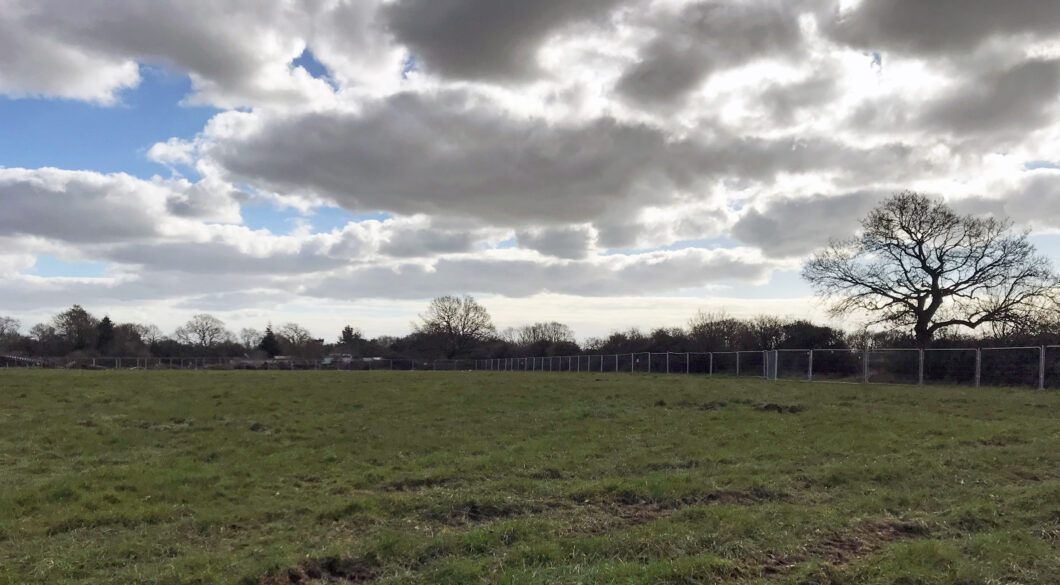
After careful analysis, we opted to use rubber feet instead of scaffolding poles for certain sections of the site. This was to avoid causing damage to dormice habitats as they burrow in the top layer of soil and foliage. It’s important to consider this ahead of time, before driving a scaffolding pole into the ground, as dormice are found in very few places in the UK and are protected under the Wildlife and Countryside Act, 1981.
Now that are fencing is in place Dandara can now get plant, machinery and materials on site to start the process of building hundreds of new homes.
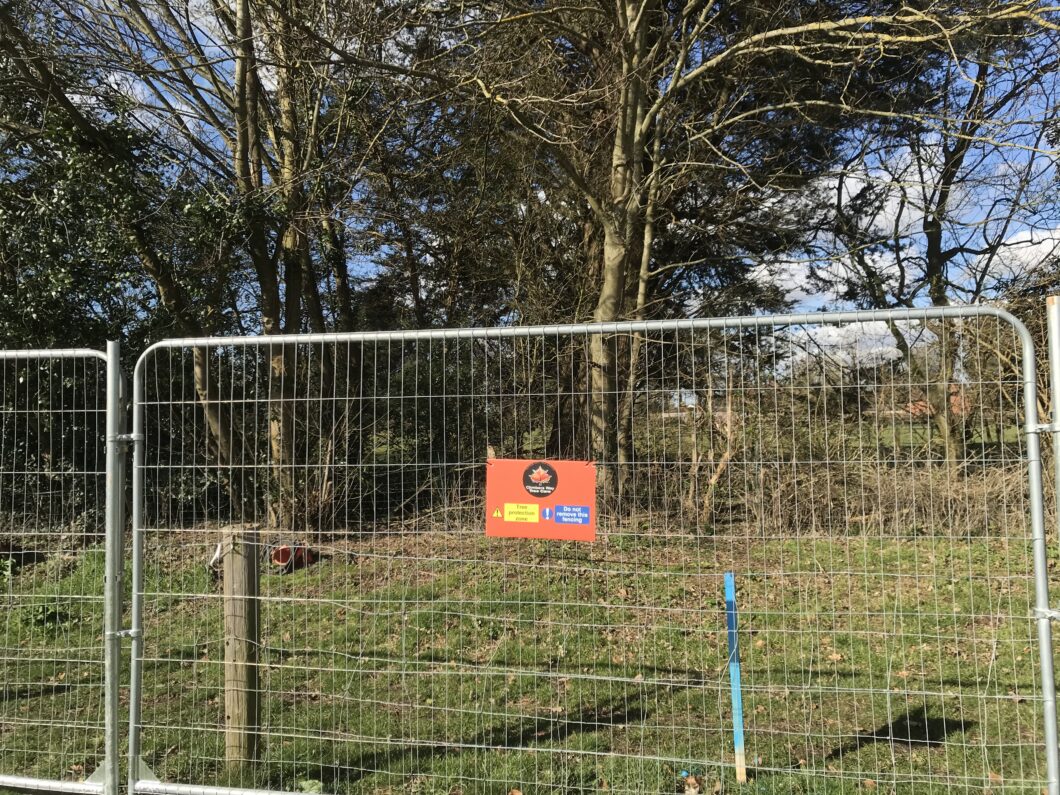
We can supply and install tree protection fencing for your development site in accordance with BS5837, ensuring that the roots, trunk, bark and branches of each tree are protected properly. Contact us for a free quote
Maintaining the Trees Along Highways
If you’ve ever sat on the top level of a double decker bus, you’ll no doubt have noticed lightweight tree branches brushing against the roof! If you’ve sat at the very front you might even instinctively duck when you see oncoming branches!
It is the responsibility of the local authorities to look after trees that grow on highway verges.
They make sure there is enough clearance under trees that overhang the highway to allow for the safe passage of high sided vehicles like double decker busses and lorries.
Oxfordshire County Council require at least 5.2m of clearance.
Trees also need to be sufficiently cut back from the edge of the carriage way to allow for the clearance of wing mirrors.
It’s not just trees that overhang roads that need maintaining. If it wasn’t for regular tree maintenance you might hit your head on low branches whilst walking along!
Trees and vegetation overhanging footpaths should be crown-lifted to at least 2.5m.
Meeting the Requirements of Local Authorities
Local authorities need to maintain trees on verges in order to keep the traffic moving and they need to do so in a way that they can be sure they are getting good value for money from tax payer funds.
They need to use a firm they can trust and that they know can deliver.
Oxfordshire County Council require firms working on trees next to public highways to have at least £10 million in public liability insurance, the skill to complete work in accordance with the current British Standard for tree work (BS3998), and be capable of following statutory regulation for working on the highway, notifying the correct departments and using the correct signage, guarding and PPE.
Because we meet all these requirements, delivering a high standard of work efficiently and safely (not just for us but for other road users), Oxfordshire County Council use Climbers Way Tree Care to carry out tree maintenance along their verges.
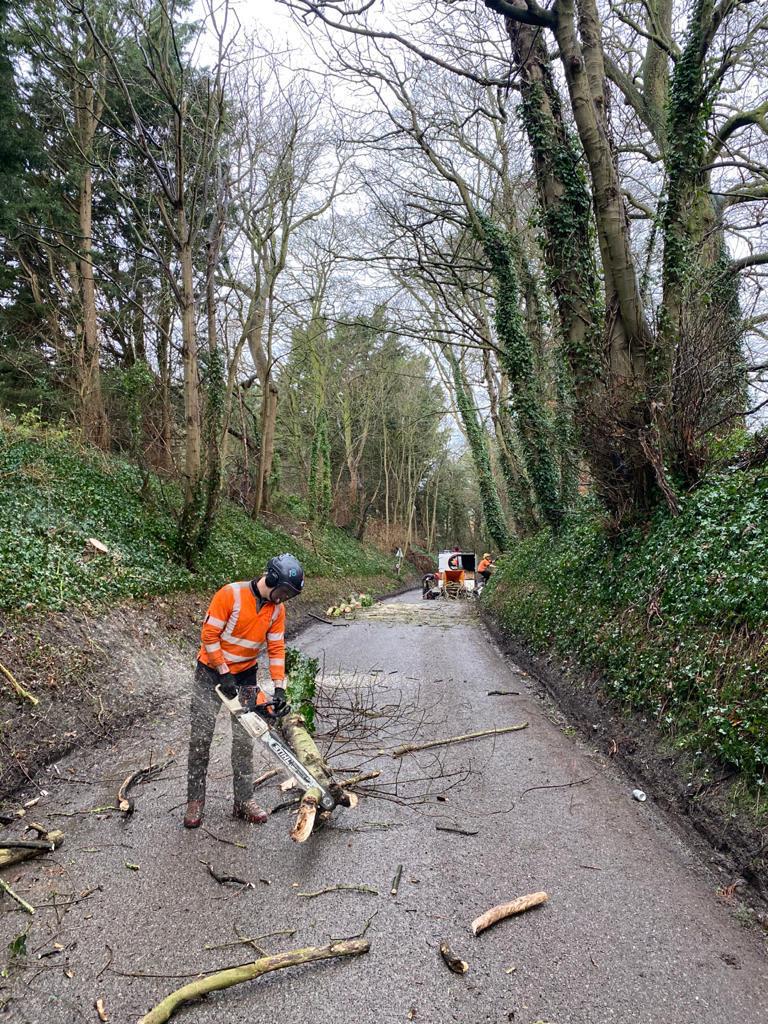
We were recently tasked with works across multiple trees including felling, removing branches, dead wooding, cutting back from roads and crown lifting over footpaths.
We’re Experienced with Planning Road Closures

Before we could start work, we need to consider the safety of road users, pedestrians and our own tree surgeons. We need to protect our tree surgeons and equipment from passing traffic and make sure that road users and pedestrians are not at risk from falling debris.
Sometimes this requires full road closures in which case we need to plan the closure, get approval from the council, advertise the closure and inform all the relevant people.
That’s exactly what we did when working with Oxfordshire County Council.
Increased Efficiency with MEWPs

In order to reduce the amount of time roads were closed for we need to work as efficiently as possible. To help us with this job we used our new Mobile Elevated Work Platform (MEWP).
Our MEWP allows us to work up in the tree canopy without having to climb up it with our tools. Since it’s mounted to a van it’s mobile and perfect for carrying out work on multiple trees by the road side. It’s also great for working on diseased or dying trees where climbing could be difficult due to reduced limb strength. Since we can get tools and tree surgeons into the tree canopy quicker it helps us to complete our work more efficiently allowing us to offer better value for money to local authorities.
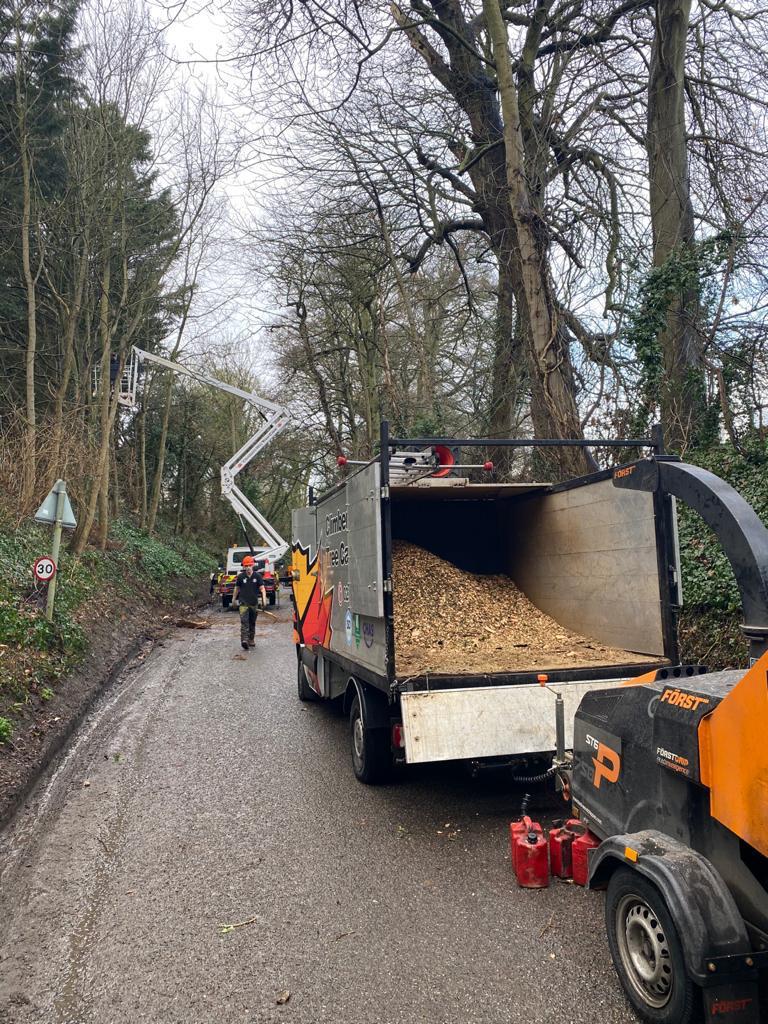
This was another project with Oxfordshire County Council we enjoyed being part of and we look forward to working with their tree team again very soon.
If you require tree surgeons who have good relationships with local authorities and are experienced with handling road closures then get in touch with us for a free quotation
Nothing sends fear through a gardener like honey fungus. It’s a parasitic fungus, orangey brown in colour, that attacks and kills the roots of many trees. It’s one of the most destructive fungal diseases and no tree is completely immune!
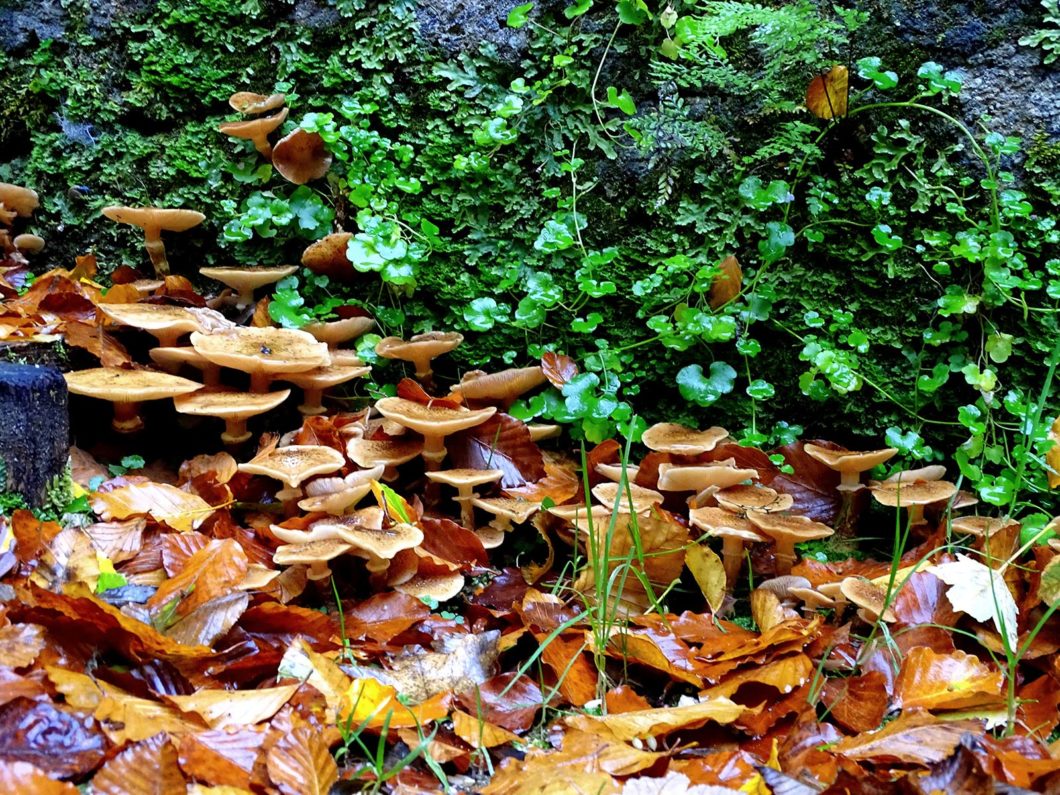
But just because your tree is infected it doesn’t mean it always needs to be removed.
First of all there are several different types of honey fungus and they all differ by how deadly they are. And secondly the vitality and vigour of the infected tree needs to be taken into account; Whilst an infected tree may well eventually succumb to the fungus it could take decades to happen.
And that’s why we didn’t have to remove this tree we were recently called out to.
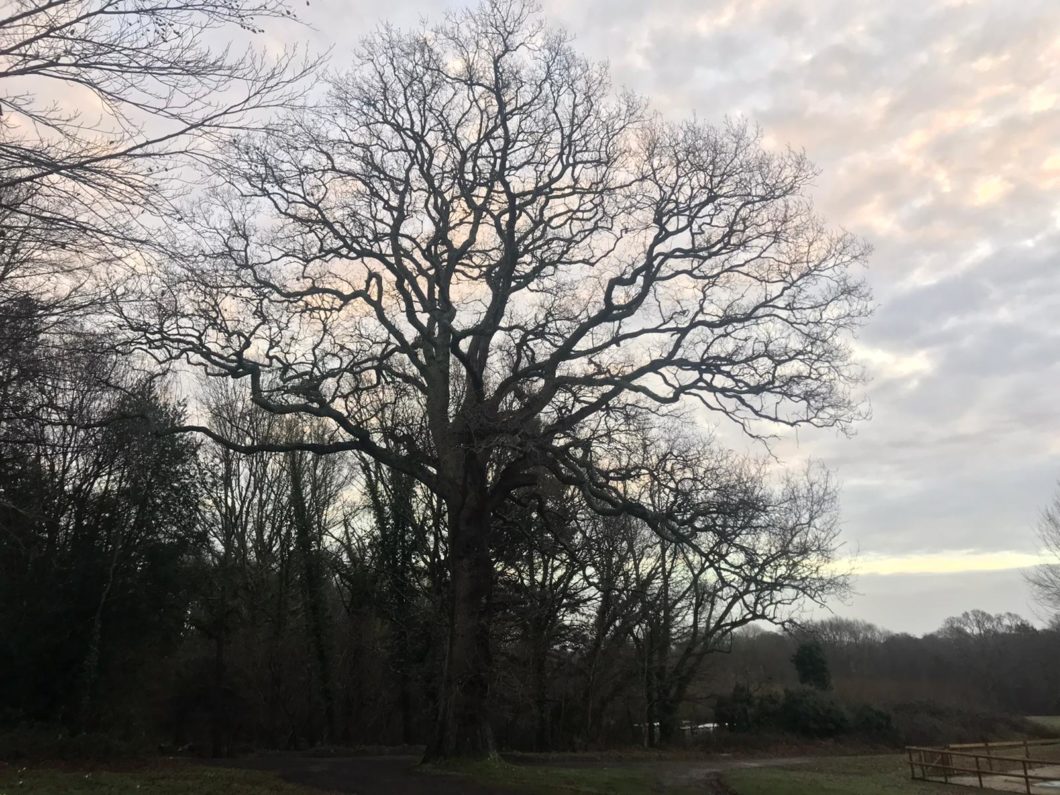
It’s mature tree that has a honey fungus infection in the heartwood but is otherwise healthy. It’ll still be around for some time but its stability had been weakened by the infection.
And with children often playing below it the last thing we want is branches to fall off or the whole thing falling over.
In order to improve the stability of the tree we gave the tree a crown reduction. We reduced the overall spread of the canopy and thinned it out. This means there is a reduced weight load on each union which will help to prevent branches breaking off. And a smaller lighter canopy overall will reduce the weight load on the trunk and reduce wind sail.

As an aside, did you know that the largest living thing on our planet is a single honey fungus? It lives in the Malheur National Forest in the Blue Mountains of Oregon, spans 3.4 square miles and is estimated to be 2,400 years old!
If you spot honey fungus on your trees make sure to consult an expert before making any decisions as every case is different. Get in touch with us and we will take a look at your tree and give it a full health assessment.
At Climbers Way we’re capable of taking on any job the construction industry can throw at us.
Here are some jobs we have completed recently.
Clearing 30 Acres of Woodland
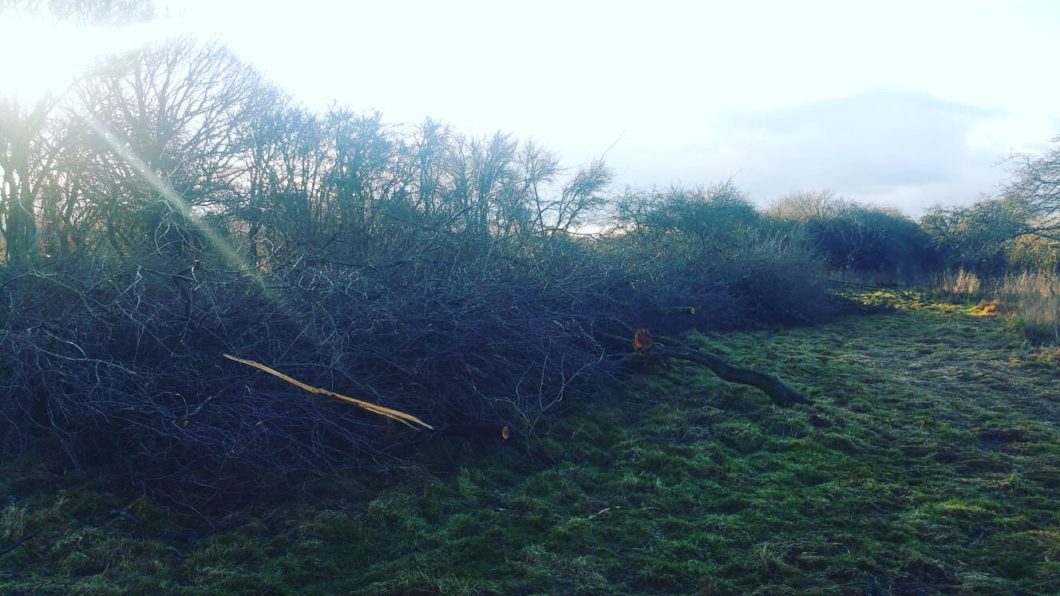
In order for a construction firm to get started with their work they first needed to have 30 acres of woodland and scrubland cleared so they called us to help.
The majority of the work was juvenile trees ranging from 1m-7m, quite small stuff, but because it was riddled in bramble and ivy it could’ve been a difficult job.
But with the correct kit, a smart operator and great method any job becomes enjoyable.
And we had all three.
We started by mulching the light/thin bramble and shrubs first.
As the larger trees became accessible our team went in to fell them, completing their work so that when the mulcher returned it could deal with the remains.
With our mulcher we can cover a large area of thick material very quickly.
We usually use our 8 tonne machine with a mulching head, but when the spread of greenery gets too big for that, and with efficiency in mind, we switch to a larger mulcher on the back of a tractor.
Keeping the Trains Running

A line of mature conifers running alongside a railway had grown to such a size that the dense canopies were not letting the wind pass through.
This left them prone to the wind which is not safe next to a railway line so they had to be felled.
We used a winch to pull them away from the railway, and then stacked them with a 7 series Avant.
The trees where felled by means of a winch that pulled them away from the railway where they where stacked with a 7-series Avant.
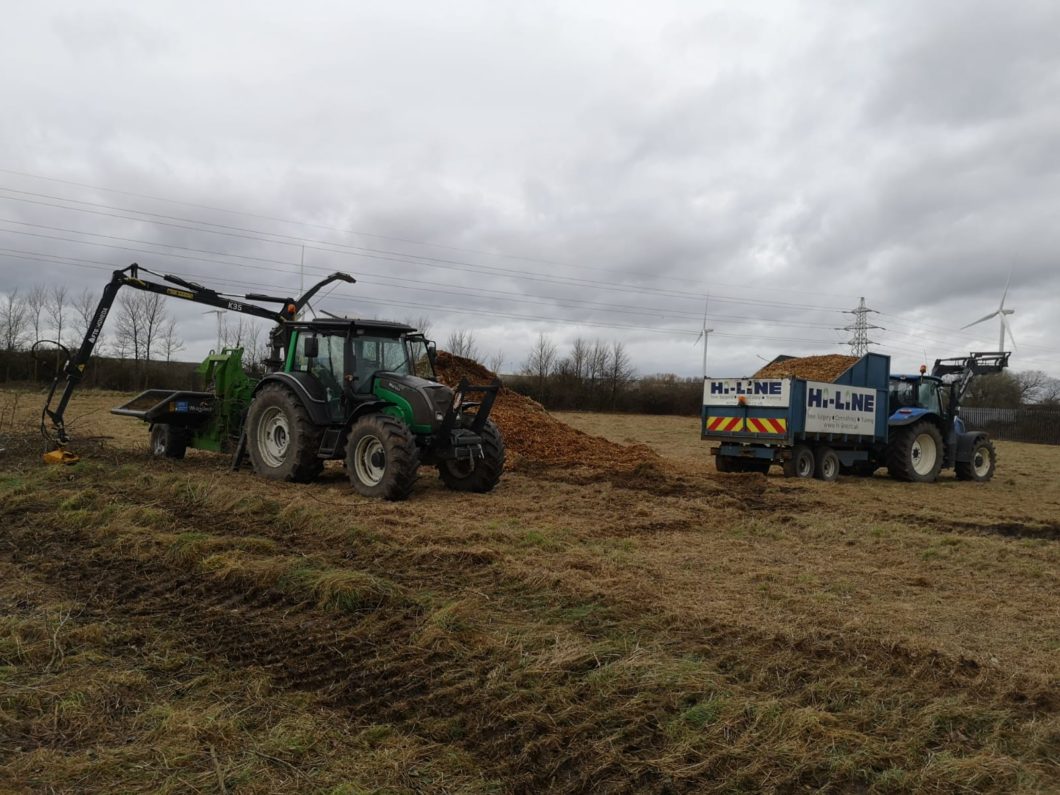
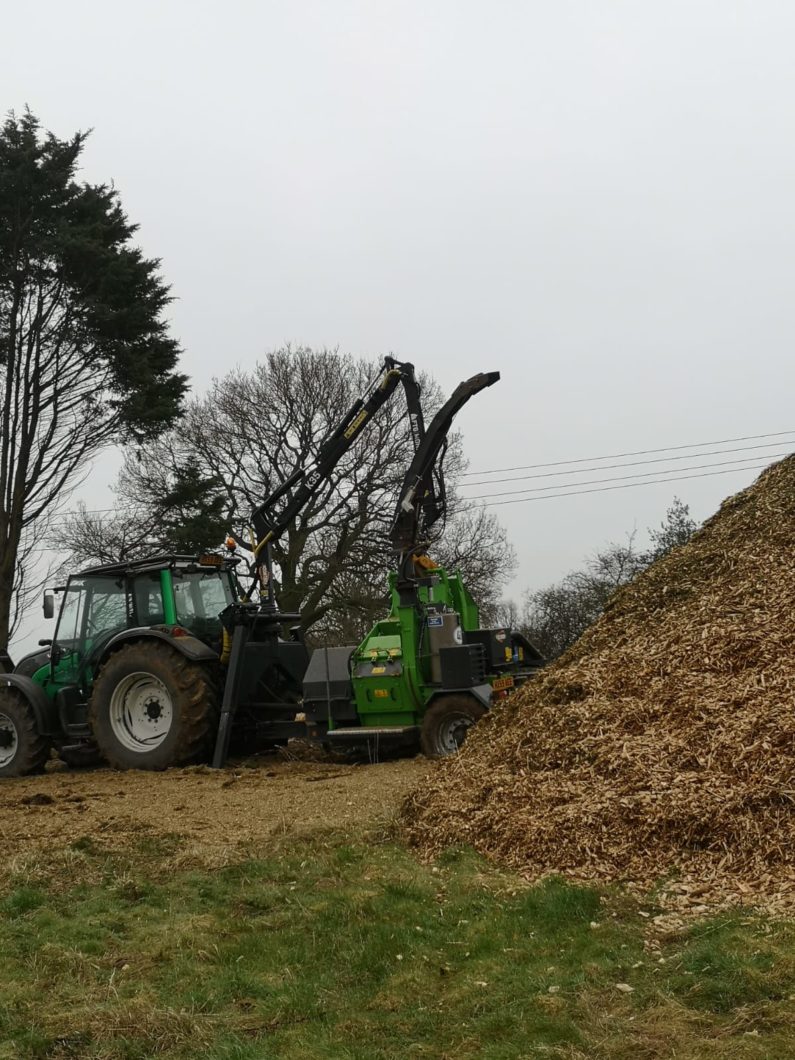
Using our crane fed chipper we chipped the material into a large pile where it was loaded by telehandler into artic lorries that transported it away for biomass fuel.
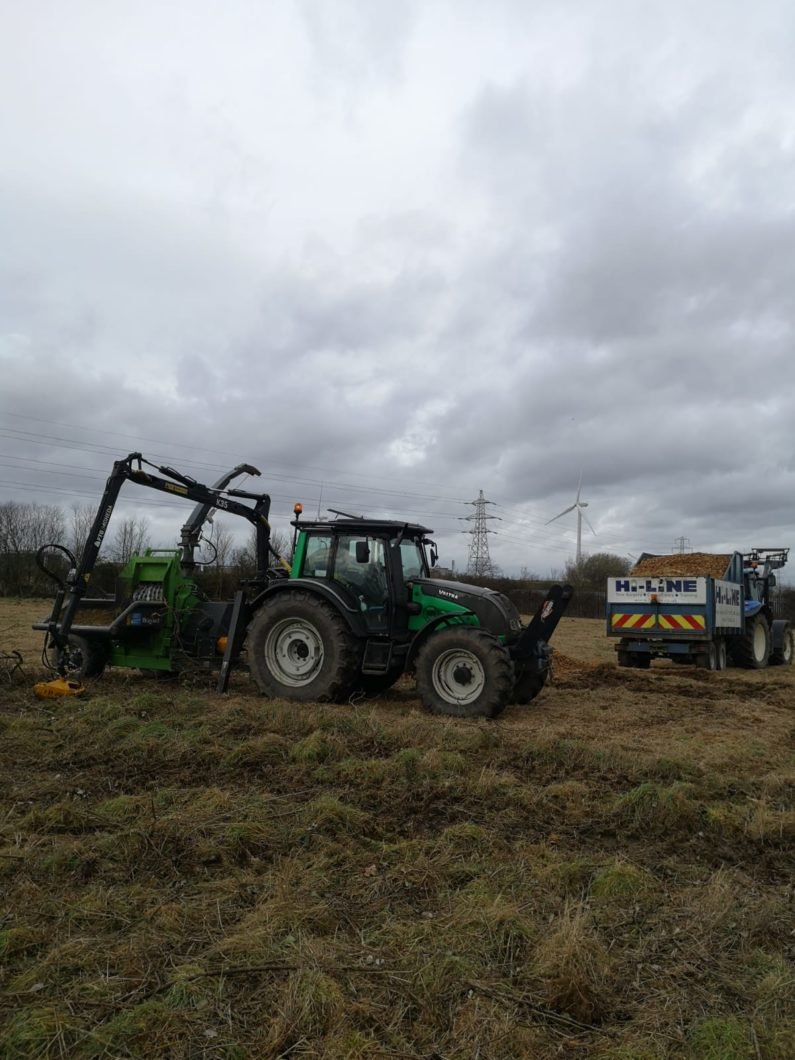
800 Stumps on an Ex MOD Site
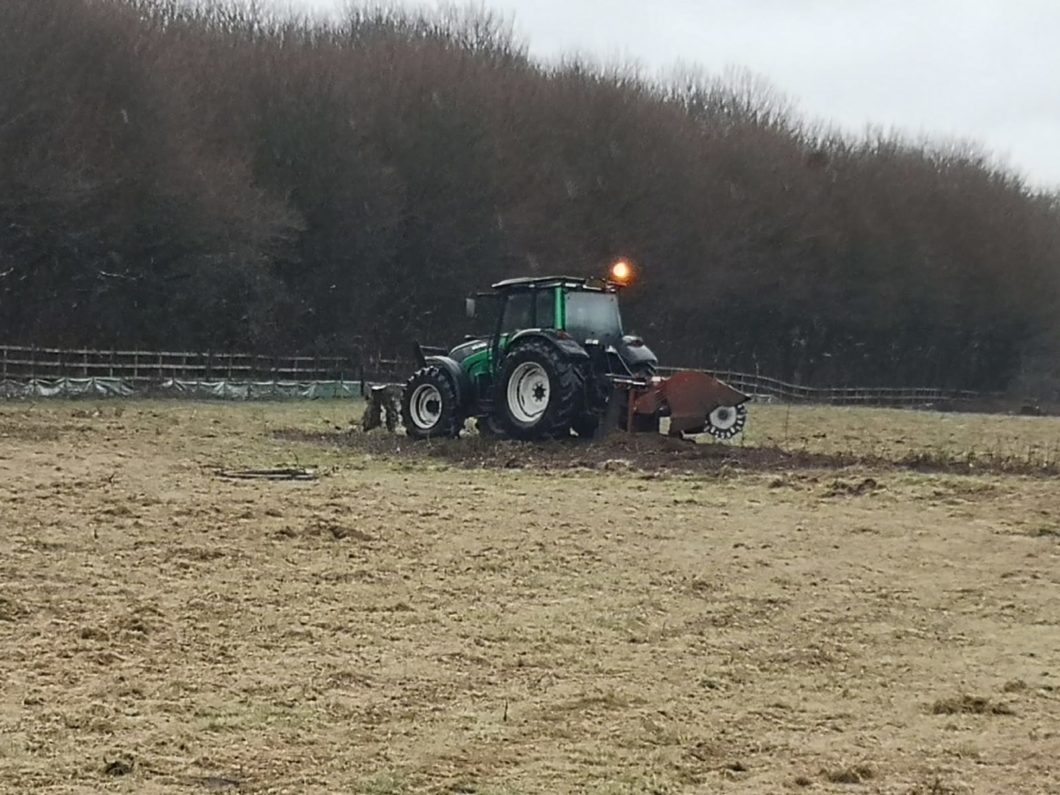
Our client needed an ex MOD site cleared of 30cm diameter softwood tree stumps. All 800 of them!
Instead of ripping them from the ground, windrowing them and getting in an expensive mulching deck we used our lovely PTO grinder.
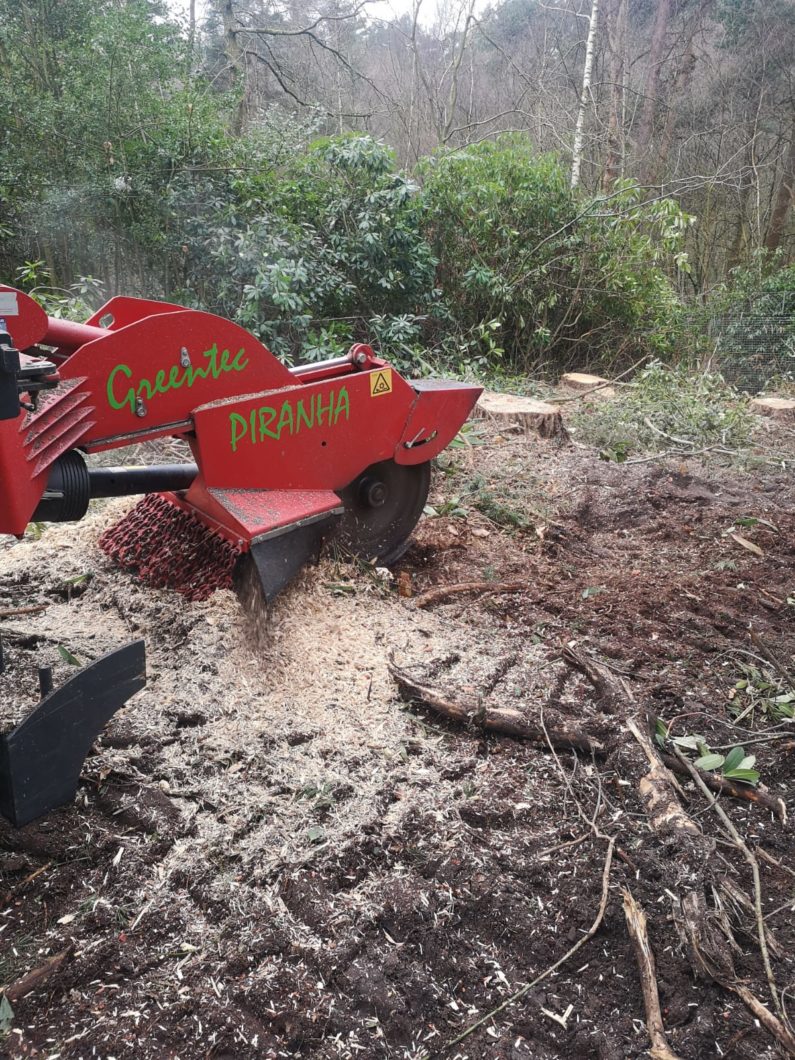
The PTO driven grinder sits on the back of a tractor with a fully rotatable driver’s seats so that you can drive the machine right up to the stumps, and then using the remote controls, grind the stumps until nothing is left.
We had the site complete in 3 days leaving with a very happy client.
Excavator Mulching
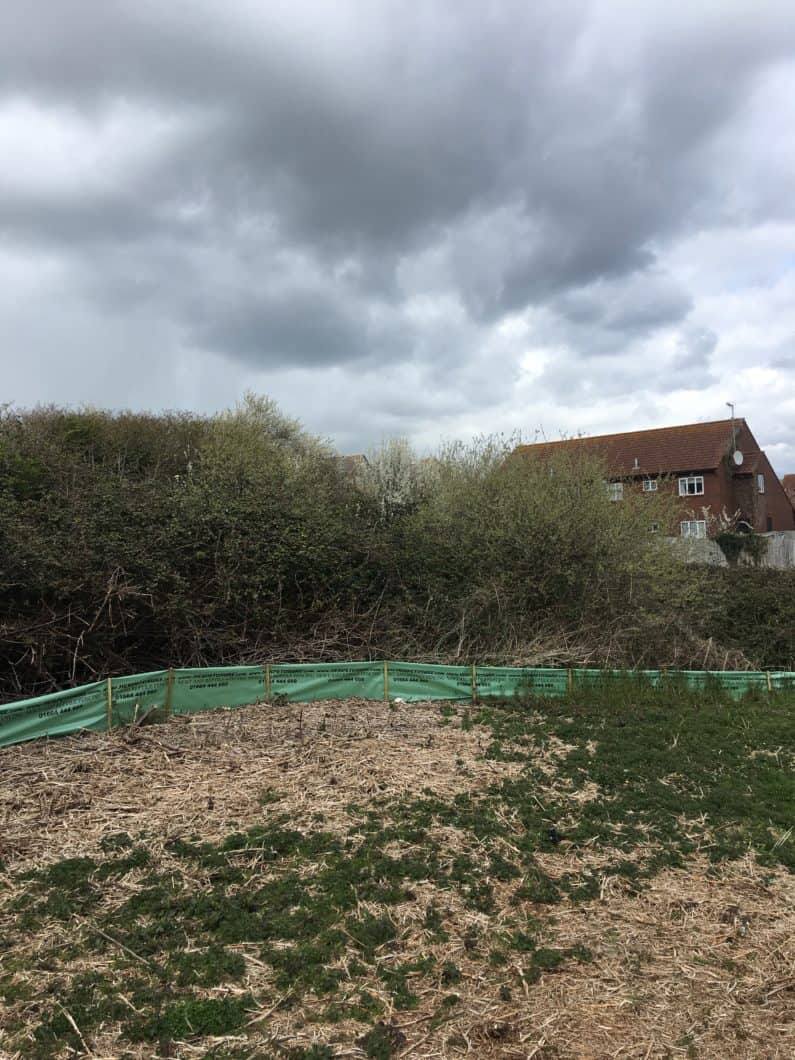
On an estate that required a large site clearance there was a section that consisted of bramble shrubs and old small stumps.
We delivered our 9 tonne excavator with a mulching head and got to work.
The great thing about this machine is that you have a wide swing which allows a large area to be mulched in seconds.
And due to the excavator being on tracks we could get to all areas of the rugged boggy ground that a tractor may not get to.
The area was cleared in a day leaving the rest of our team a clear run for the other bits of felling needed on the site.
Making Room for a Bridge
A bridge was to be made to allow more foot passage to a new estate. But there was an area of woodland made up of mature poplar, willow and oak that had to be cleared first.
Once the trees were felled, the cutters cut the branches at the branch collars and the timber into set lengths where it was left to be collected.

An excavator with a grab then comes along and grabs the lengths of timber and brash and moves it to a location where there’s enough room for the crane fed chipper to chip the all the material.
On this occasion the chippings were left on the bank in order to suppress weeds to prevent future maintenance work.
Read more about our commercial site clearance and tree felling services.
 At Climbers Way we pride ourselves in having the right equipment and expertise to clear any amount of vegetation and shrubbery.
This is true for even mature trees and logging that needs to be done.
The Six Steps of a Site Clearance
- Look at the arboriculture impact report which tells us which trees are coming out and which trees are staying.
- Install tree protection fencing around any trees that are remaining.
- Fell all trees due for removal and remove any brash & vegetation
- Chip all felled trees and extract timber for processing and recycling
- Grind stumps down to allow for ground works.
In the following video you can see some of these steps going on.
We typically work in commercial spaces, where we clear areas for development purposes and for land that is needing to be maintained.
With the equipment and training we have, we are able to work both at a domestic and a commercial level.
We are also a Trustmark registered company. This means we’ve had our technical skills, trading record and financial position checked by this Government licensed organisation.


For any of your clearing needs, get in touch for a free no obligation quote.